
AI
Insurance
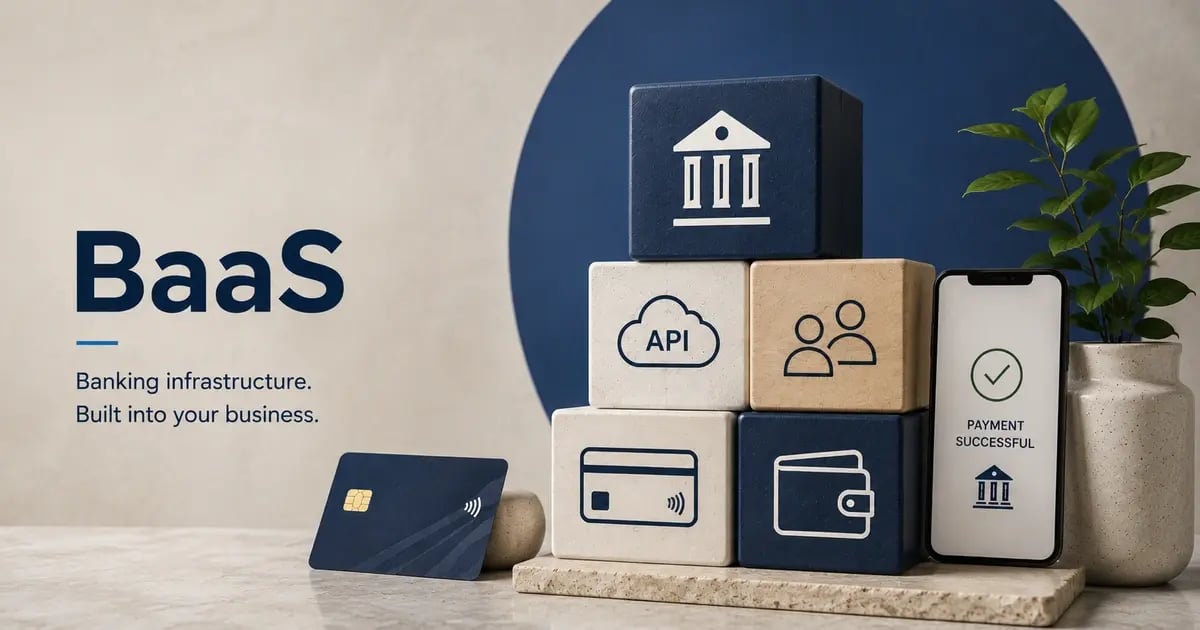

Banking as a Service (BaaS) enables non-bank companies to offer banking products such as accounts, payments, cards, lending, and digital wallets through APIs provided by licensed financial institutions. The bank manages the regulated banking infrastructure, while the business controls the customer experience, product design, and distribution.
BaaS is one of the core models behind embedded finance, digital banking, fintech apps, neobanking solutions, and API-driven banking products.
Banking as a Service is a model where licensed banks and infrastructure providers expose banking capabilities through APIs so third-party companies can offer financial products inside their own platforms.
In a traditional banking model, a company that wanted to launch financial services had to build core banking infrastructure, secure licenses, manage compliance, and operate regulated financial systems. BaaS changes that model by allowing businesses to connect to banking infrastructure through APIs instead.
This gives fintechs, software companies, ecommerce platforms, marketplaces, and other digital businesses the ability to offer financial services without becoming banks themselves. Depending on the provider, those services may include account creation, payments, debit cards, lending, wallets, compliance workflows, or transaction processing.
That is why banking as a service, BaaS platforms, API banking solutions, and digital banking infrastructure are now closely tied to fintech product development and embedded finance.
A typical BaaS model involves a licensed bank, a BaaS provider, a business or fintech, and the end customer. APIs connect these participants so banking services can be delivered through a third-party product or digital experience.
The licensed bank provides the regulated foundation. The BaaS provider often supplies the API layer, integration tooling, operational workflows, and technology infrastructure. The business or fintech designs the user experience and brings the product to market. The customer interacts with banking services through the company’s app, website, marketplace, or platform.
In practice, BaaS depends on secure financial services APIs, banking APIs providers, identity verification, compliance processes, transaction monitoring, payment rails, and core banking connections. These components form part of a wider financial API ecosystem.
This is also where related infrastructure concepts such as APIs, real-time payments, and global payment networks become important. BaaS does not operate in isolation; it sits inside a larger financial technology environment where accounts, data, payments, and settlement systems have to work together.
Banking as a Service has become important because companies can now embed financial services into customer journeys without owning a bank. It creates new revenue opportunities, improves customer retention, and allows financial products to appear inside the platforms people already use.
The real shift is economic as much as technical. Businesses realized that financial services could be embedded into commerce, software, payroll, mobility, travel, insurance, creator platforms, and B2B workflows. A company may not want to become a bank, but it may benefit from offering payments, accounts, cards, lending, or wallets inside its own customer experience.
That is why BaaS is closely connected to embedded finance. When a customer accesses a loan at checkout, uses a branded debit card from a fintech app, gets paid through a creator platform, or manages business cash flow inside accounting software, BaaS infrastructure may be powering the experience behind the scenes.
For banks, BaaS can create new distribution channels. For fintechs and digital businesses, it can reduce the time and cost required to launch financial products. For customers, it makes financial services more accessible at the point of need.
BaaS platforms can support a wide range of financial products, from simple payment functions to full digital banking experiences. The available products depend on the licensed bank, infrastructure provider, compliance model, and API capabilities involved.
Common BaaS-powered products include:
Real-world BaaS examples often appear as banking features inside non-bank environments. Ecommerce platforms may offer merchant financing or integrated payments. Payroll providers may offer earned wage access or employee wallets. Software platforms may embed business banking tools for small businesses. Fintech apps may offer accounts, cards, and transfers through licensed banking partners.
Many of these initiatives sit within broader banking & financial services modernization programs, where organizations are rethinking digital products, customer experience, payments infrastructure, and platform strategy.
Banking as a Service can help organizations launch financial products faster, but it also introduces compliance, operational, vendor, and regulatory risks that must be managed carefully.
The main benefits include faster time to market, lower infrastructure investment, access to regulated banking capabilities, expanded product offerings, and new revenue streams. BaaS also allows businesses to improve customer engagement by embedding financial services directly into existing user journeys.
The challenges are just as important. BaaS programs depend on third-party infrastructure, partner banks, compliance controls, data security, service reliability, and ongoing regulatory oversight. In some markets, regulators have increased scrutiny of BaaS partnerships because accountability can become unclear when banks, fintechs, and technology providers share delivery responsibilities.
A strong BaaS strategy therefore requires more than API access; it requires a clear operating model, well-defined compliance ownership, reliable infrastructure, and a customer experience that can be trusted at scale.
Whether you’re evaluating embedded finance opportunities, launching a fintech product, or modernizing digital banking capabilities, the success of a BaaS initiative depends on choosing the right infrastructure, compliance model, and customer experience strategy.
Connect with our Banking & Financial Services specialists to explore how Banking as a Service can fit into your digital finance roadmap.
As financial infrastructure evolves, organizations increasingly evaluate traditional payment networks alongside faster, API-driven alternatives. Explore why comparisons between SWIFT and real-time payment systems have become an important conversation across global banking.
Customer expectations around speed, accessibility, and international money movement continue to rise. Learn how real-time payment systems are reshaping global transactions and influencing the future of digital finance.
Banking as a Service provides the infrastructure that enables embedded finance. Embedded finance describes the customer-facing experience where financial products are built into non-financial platforms, apps, or workflows.
No. Open banking focuses on sharing financial data through secure APIs. Banking as a Service provides banking capabilities such as accounts, payments, cards, and lending through APIs.
Regulation depends on the country, product, and partnership model. Licensed banks remain responsible for regulated banking activities, while fintechs and BaaS providers may also have compliance obligations.
Yes. Through Banking as a Service partnerships, companies can offer financial products using licensed banking infrastructure, though they still need to meet applicable compliance, disclosure, and operational requirements.
APIs
Real-Time Payments
Global Payment Networks
Embedded Finance
Fintech
Neobanking
Digital Banking
Open Banking
Financial Infrastructure